
english version below
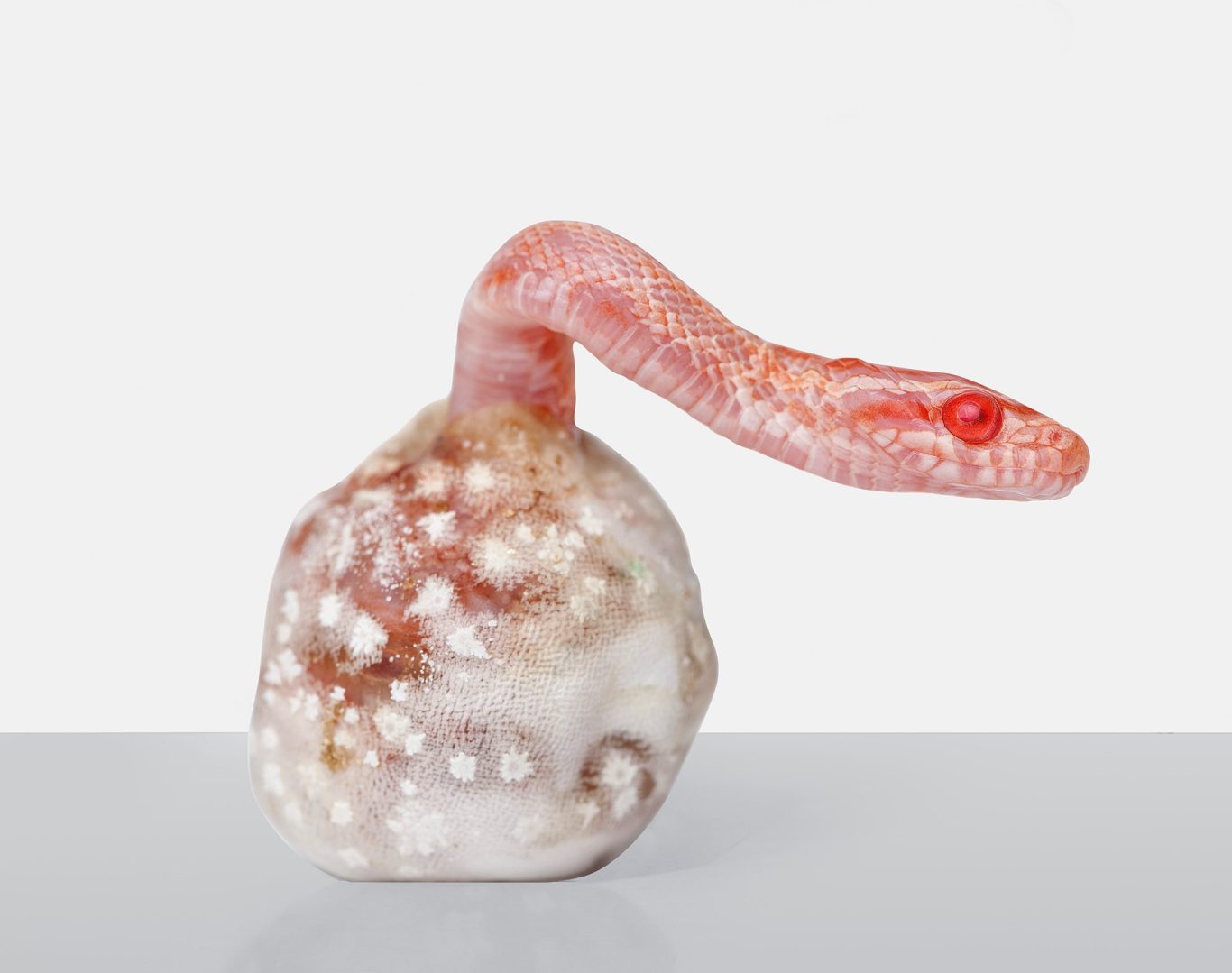
Katja Novitskova, Approximation (corn snake hatching twist), 2017, Courtesy of the artist and Kraupa-Tuskany Zeidler
LIVING ERRORS
Katja Novitskova
Eva Papamargariti
Mary-Audrey Ramirez
Kuratiert von Sophia Naumann
20.3. - 30.4.2026
Ein Living Error ist mehr als ein Makel oder Fehler im System. Es ist eine unvorhergesehene Abweichung, die nicht Scheitern bedeutet, sondern Verwandlung – ein Anfang, aus dem Neues entsteht. Lebensformen, die aus dem Raster fallen: hybrid, uneindeutig, im fortwährenden Werden.
Anlässlich der Ausstellung LIVING ERRORS wird die Galerie MARTINETZ in ein interdisziplinäres Labor verwandelt. Katja Novitskova, Eva Papamargariti und Mary-Audrey Ramirez forschen spekulativ an der Schnittstelle von Kunst, Biologie, Ökologie und Technologie – jenseits des Reagenzglases, jenseits der Genmanipulation. Die Wesen, die hier entstehen, sind plausibel, aber noch nicht real. Sie passen in keine Kategorie. Auch das ist ein Living Error: eine Form, die aus dem Raster fällt, weil das Raster schlicht zu eng ist.
Was die drei Positionen verbindet, ist ein gemeinsamer Blick: einer, der über das Menschliche hinausgeht und das Nicht-Menschliche nicht als Bedrohung begreift, sondern als transformatorisches Potenzial erfasst. Ihre hybriden Wesen – Critters, Mutanten, Approximationen – entziehen sich binären Zuschreibungen. Sie sind weder ganz organisch noch ganz maschinell, weder vollständig real noch rein fiktiv.
Katja Novitskova taucht tief in wissenschaftliche Datenbanken ein – in Genomlandschaften, Proteinmodelle und die Bilddaten von Wildkameras, die unablässig das Nicht-Menschliche dokumentieren. Was sie dort findet, überträgt sie auf Platten aus synthetischem Ton, gedruckt mit UV-Tinte. Wie antike Tontafeln halten diese Werke die Poetik des numerischen Sehens fest – und werden bereits im Moment ihrer Entstehung zu kulturellen Fossilien. Was können wir von der Welt lernen, wenn wir sie mit einem Blick erkunden, der mehr als menschlich ist und aufhören, im Mittelpunkt zu stehen? Vielleicht, dass wir in unserer Wahrnehmung sehr monoton und limitiert sind – und dass Perspektivwechsel große Potenziale bergen.
Eva Papamargariti gibt digitalen Mischwesen in Keramiken und bewegten Bildern eine Gestalt – Körper in der Schwebe zwischen Materie und Code, zwischen dem Jetzt und einem noch ungeschriebenen Morgen. Ihre Praxis erforscht das Körperliche als fluides Konzept, das durch Technologie und die unzähligen nicht-menschlichen Akteur*innen geformt wird. Der Fehler lebt hier im Dazwischen: im Noch-nicht-Fertigen, im Wesen, das sich der Eindeutigkeit verweigert – und damit die Frage stellt, ob die Grenze zwischen menschlich und nicht-menschlich je so klar war, wie wir dachten.
Mary-Audrey Ramirez modelliert ihre Critter zunächst im digitalen Raum, bevor sie diese in 3D-gedruckten Sand überführt. Ihre Geschöpfe entstammen einer Bildwelt aus Gaming und digitaler Popkultur und wirken zugleich zeitlos, wie Gargoyles, die durch einen Algorithmus gegangen sind. Ihnen ist allerdings keine bedrohlich Wirkung eigen: Was uns hier begegnet, sind insektoide und reptileinartige Wesen, die uns mit ihrer Fremdheit ebenso entwaffnen wie mit einer seltsamen Niedlichkeit verzaubern – Critter, die ins uns das Bedürfnis zur Fürsorge wecken. Insbesondere, wenn sie uns auf Bildträgern aus feinschimmernden Satin begegnen.
Gemeinsam entwerfen die drei Künstlerinnen eine spekulative Form des Miteinanders: LIVING ERRORS schafft ein Labor, in dem Fehler nicht erforscht und korrigiert werden müssen, sondern das Fremde, oftmals bedrohlich assoziierte, willkommen ist. Eine Einladung, sich auf die Vorstellung einzulassen, dass Fehler nicht das Ende der Welt bedeuten, sondern der Anfang von etwas Neuem sein können – und vielleicht auch, sich selbst und das Gegenüber mit Imperfektionen und Mäkeln zu akzeptieren.
Sophia Naumann
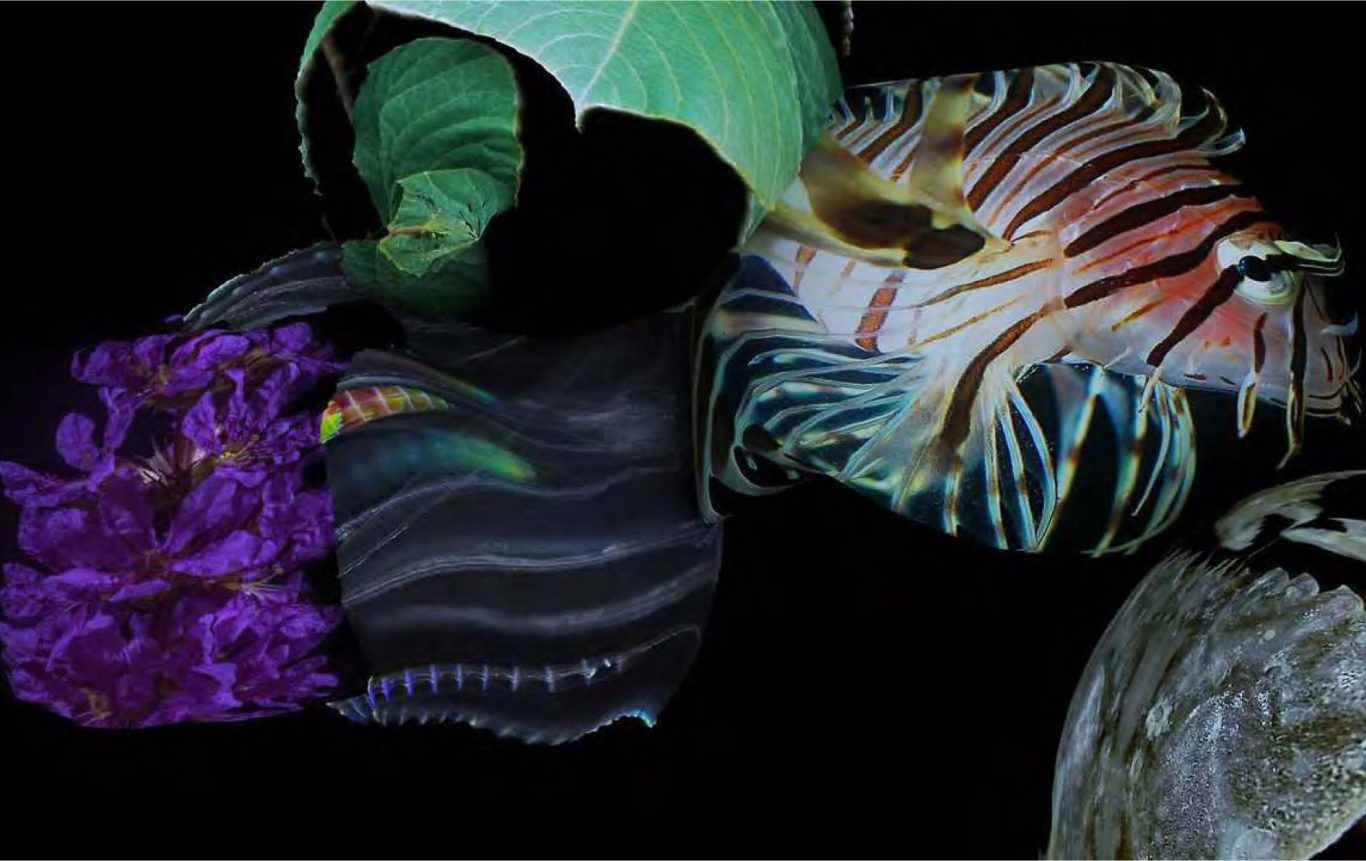
Eva Papamargariti, Precarious Inhabitants, video still, 2018
LIVING ERRORS
Katja Novitskova
Eva Papamargariti
Mary-Audrey Ramirez
Curated by Sophia Naumann
20.3. - 30.4.2026
A Living Error is more than a flaw or glitch in the system. It is an unforeseen deviation that does not signify failure, but transformation — a beginning from which something new emerges. Life forms that fall outside the grid: hybrid, ambiguous, in a state of perpetual becoming.
On the occasion of the exhibition LIVING ERRORS, the gallery MARTINETZ is transformed into an interdisciplinary laboratory. Katja Novitskova, Eva Papamargariti, and Mary-Audrey Ramirez conduct speculative research at the intersection of art, biology, ecology, and technology — beyond the test tube, beyond genetic manipulation. The beings that emerge here are plausible, but not yet real. They fit into no category. That, too, is a Living Error: a form that falls outside the grid, simply because the grid is too narrow.
What connects the three positions is a shared perspective: one that reaches beyond the human and perceives the non-human not as a threat, but as transformative potential. Their hybrid beings — critters, mutants, approximations — resist binary categorisation. They are neither entirely organic nor entirely mechanical, neither fully real nor purely fictional.
Katja Novitskova delves deep into scientific databases — into genomic landscapes, protein models, and the image data of wildlife cameras that ceaselessly document the non-human. What she finds there, she transfers onto plates of synthetic clay, printed with UV ink. Like ancient clay tablets, these works capture the poetics of numerical vision — and become cultural fossils at the very moment of their creation. What can we learn about the world when we explore it through a gaze that is more than human, and cease to place ourselves at the centre? Perhaps that our perception is very monotonous and limited — and that shifts in perspective hold enormous potential.
Eva Papamargariti gives form to digital hybrid creatures in ceramics and moving images — bodies suspended between matter and code, between the present and an as yet unwritten tomorrow. Her practice explores the corporeal as a fluid concept, shaped by technology and the countless non-human actors that inhabit our world. The error lives here in the in-between: in the not-yet-finished, in the being that refuses definition — and in doing so raises the question of whether the boundary between human and non-human was ever as clear as we thought.
Mary-Audrey Ramirez first models her critters in digital space before translating them into 3D-printed sand. Her creatures spring from a visual world of gaming and digital pop culture, yet feel timeless — like gargoyles that have passed through an algorithm. They carry no sense of menace: what we encounter here are insectoid and reptilian beings that disarm us with their strangeness just as much as they enchant us with a peculiar cuteness — critters that awaken in us an impulse to care. Especially when they meet us on picture carriers of finely shimmering satin.
Together, the three artists sketch a speculative form of coexistence: LIVING ERRORS creates a laboratory in which errors need not be studied and corrected, but where the strange — so often associated with threat — is welcomed. An invitation to entertain the idea that errors do not mean the end of the world, but can be the beginning of something new — and perhaps, too, to accept oneself and others, with all their imperfections and flaws.
Sophia Naumann
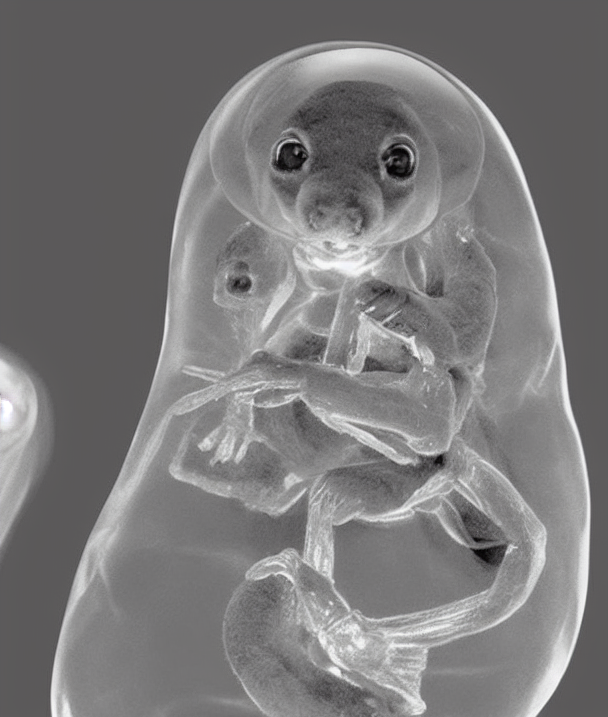
Mary-Audrey Ramirez, Bridge Baby Bear, 2025, digital print on satin, Courtesy of the artist and MARTINETZ, Cologne